
Turf Construction from Scratch to End – A Step-by-Step Look at How Modern Sports Grounds Are Built
April 23, 2025
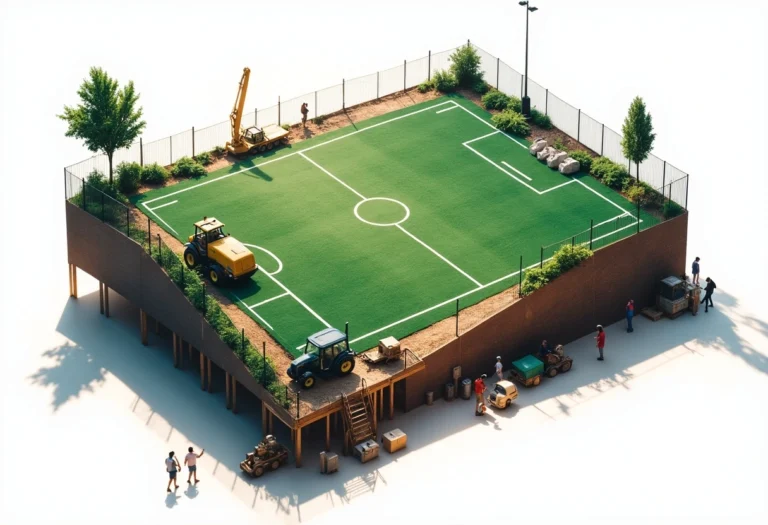
Artificial turf grounds are booming in popularity across India. From football turf construction to cricket and box cricket turf construction, this is not just about creating a sports space — it’s about building a long-term business asset. But what really goes into the making of a turf ground?
Here’s how it all unfolds, from a bare plot to a fully functional sports facility.
1. Site Inspection & Planning
It all starts with understanding the land — its size, slope, drainage pattern, and surroundings. The orientation of the ground, sun exposure, wind direction, and soil quality all influence the initial plan. This phase includes selecting the right sport — football, cricket, box cricket, or a multisport combo — based on demand and area.
2. Ground Preparation & Drainage Setup
One of the most critical steps. Excavation begins, followed by leveling and compaction. A strong foundation is key. Turf grounds need proper drainage systems to handle heavy rain — and this is where quality matters. At Meckavo Sports, for instance, high-quality slope grading and layering systems are used to ensure no waterlogging, even during monsoons.
3. Sub-Base & Base Layers
Crushed stones or road metal (known as WBM layer) is added and compacted. This is followed by a layer of crusher dust or m-sand. This strong sub-base is vital for shock absorption and player safety. For cricket turf construction or football turf construction, the layer thickness and compaction methods vary slightly based on usage.
4. Artificial Grass Laying
Now comes the heart of the turf — the synthetic grass. Rolls of premium artificial turf are laid down carefully and joined using high-quality adhesives and seam tapes. For sports like football, white lines aren’t painted — instead, white-colored turf strips are fixed into the surface, offering better durability and finish.
5. Infill Materials
A mix of rubber granules and silica sand is filled between the blades of synthetic grass. This improves bounce, stability, and comfort during play. For box cricket turf construction, the infill materials may be customized for better ball behavior and safety.
6. Perimeter & Safety Netting
Perimeter fencing, side netting, entry points, and seating arrangements (if any) are added next. High-quality sports netting ensures safety and convenience during play, especially in urban areas.
7. Lighting Systems Installation
For extended playing hours and night tournaments, installing high-quality lighting is a game-changer. LED floodlights are installed at strategic points to ensure uniform brightness. Good lighting not only supports smooth gameplay but also enhances the revenue potential of the turf.
8. Final Finishing & Branding
Once construction is complete, the turf is cleaned, tested, and handed over. Many clients also go for digital booking systems, branding walls, or even turf-specific mobile apps to boost operations.
Turf Construction is a Smart Business Move
From schools to entrepreneurs, turf building is attracting smart minds across India. With an optimal budget of ₹30–40 lakhs, you can set up a professional turf facility. And if you invest in lighting, branding, and location strategy, you can recover your investment in just one year.
Whether it’s football turf construction, cricket turf construction, box cricket turf construction, or multi-sport facilities — it all starts with choosing the best turf builders in Mumbai or your region who understand the science and business behind turf development.